

Roasted makhana is easier to digest, tastier, and better for daily snacking, while raw makhana is better suited for cooking into curries, kheer, and fasting dishes. Nutritionally the two are close — roasting removes moisture and slightly improves digestibility without stripping out key nutrients like protein, fiber, magnesium, or antioxidants.
Makhana (fox nuts, or lotus seeds) has gone from a festival staple in Indian households to a shelf staple in health-food stores worldwide. But one question keeps coming up whenever people start buying it in bulk: should you eat it raw, or roasted?
This guide breaks down the real differences — texture, digestibility, nutrition, and use cases — so you can decide what belongs in your kitchen.
What Is Makhana?
Makhana is the puffed seed of the Euryale ferox plant, an aquatic crop grown mainly in wetlands across Bihar, India, which produces most of the world’s supply. The seeds are harvested, sun-dried, and either sold raw or heat-processed into the crunchy puffed form most people recognize as a snack.
Traditionally used during religious fasting periods (vrat) and in festive sweets like kheer, makhana has more recently gained traction as a low-calorie, high-fiber alternative to fried snacks.
Raw vs Roasted Makhana: The Core Difference
| Raw Makhana | Roasted Makhana | |
|---|---|---|
| Texture | Hard, dense, slightly chewy | Light, airy, crisp |
| Taste | Bland, mildly starchy | Nutty, savory |
| Moisture content | Higher | Lower |
| Digestibility | Lower — best cooked before eating | Higher — heat breaks down anti-nutrients |
| Ready to eat? | No — needs cooking or roasting | Yes |
| Best use | Curries, kheer, fasting recipes, grinding into flour | Direct snacking, salad toppings, on-the-go food |
| Shelf life | Longer (no oil/seasoning) | Slightly shorter once seasoned |
| Calories (per 100g) | ~350 kcal | ~347–350 kcal (dry roasted, unseasoned) |
The nutrient profile barely changes between the two — dry roasting (no oil) doesn’t meaningfully add calories or strip out protein or minerals. The real difference is how usable the food is straight out of the pack.
Raw Makhana: What It’s Good For
Raw makhana is the unroasted, unseasoned seed. It’s firm enough that most people don’t eat it directly — instead, it’s simmered into dishes where it absorbs liquid, spices, and flavor.
Common uses:
- Makhana kheer (a milk-based dessert)
- Sabzi and gravy-based curries
- Fasting-day meals (navratri, ekadashi)
- Ground into flour for gluten-free baking
Why some people choose raw:
- No added oil, salt, or preservatives
- Full control over how it’s cooked and seasoned
- Longer shelf life in an airtight container
The trade-off: raw makhana contains more of the natural anti-nutrients (like phytic acid) common to unprocessed seeds, which heat helps break down. It’s technically edible raw, but not the most digestible or pleasant way to eat it.
Roasted Makhana: What It’s Good For
Roasted makhana is made by dry-roasting (or lightly oil-roasting) raw seeds until they puff up, lose moisture, and turn crisp. This single step is what turns makhana from a cooking ingredient into a snack.
Why people choose roasted:
- Ready to eat straight from the pack
- Easier to chew and digest than the raw form
- Works as a low-oil substitute for chips, namkeen, or fried snacks
- Holds seasoning well (salt & pepper, peri peri, cheese-chilli, and other flavored variants)
Because of this, roasted makhana is the version most commonly sold as a packaged snack, and the one most fitness and diet plans refer to when they mention “makhana.”
Nutritional Comparison at a Glance
Per 100g, unseasoned:
| Nutrient | Raw Makhana | Roasted Makhana |
|---|---|---|
| Calories | ~350 kcal | ~347–350 kcal |
| Protein | ~9–10g | ~9–10g |
| Fiber | ~14g | ~14g (slightly more concentrated as moisture drops) |
| Fat | <1g | <1g (unless oil-roasted) |
| Magnesium, Calcium, Potassium | Present | Present, largely unchanged |
| Antioxidants | Present | Present |
Takeaway: dry roasting is a preparation method, not a nutrient-stripping process. The calorie and nutrient values stay close; what changes is water content, texture, and how easy the seed is to digest and eat.
Which Is Healthier: Raw or Roasted Makhana?
Neither is objectively “healthier” — they serve different purposes:
- For daily snacking, roasted (ideally dry-roasted, lightly salted) makhana is the practical, healthier-than-fried-chips choice.
- For cooking, raw makhana is the better base — you control the fat and salt added, and it integrates naturally into curries and desserts.
- Avoid heavily oil-fried or sugar-coated roasted makhana if you’re managing weight or blood sugar — check the label, since “roasted” doesn’t always mean “healthy” once flavoring is added.
How Much Makhana Should You Eat Per Day?
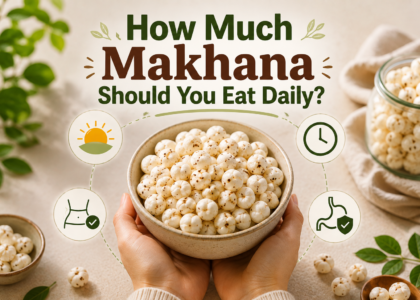
Most nutritionists recommend 25–30 grams per day — roughly one small bowl. This delivers fiber, plant protein, and minerals without excess calories.
Possible side effects of overeating makhana:
- Bloating
- Digestive discomfort
- Constipation, especially with low water intake
Moderation is key regardless of whether it’s raw or roasted.
How to Roast Raw Makhana at Home
- Heat a dry pan on low-medium flame (add ½–1 tsp ghee or oil if desired, optional).
- Add raw makhana in a single layer.
- Roast for 8–10 minutes, stirring frequently, until crisp and lightly golden.
- Cool completely before seasoning — this is what keeps them crunchy rather than chewy.
- Season with salt, pepper, or spices of choice, and store in an airtight container.
Frequently Asked Questions
1. Is it safe to eat makhana raw?
Yes, raw makhana is safe to eat, but it’s hard, bland, and harder to digest than the roasted version. It’s usually cooked into dishes rather than eaten straight from the pack.
2. Is roasted makhana healthier than raw makhana?
Not fundamentally — the nutrient content is nearly identical. Roasted makhana is easier to digest and more convenient to eat, which is why it’s the more common snack choice.
3. Can I eat makhana every day?
Yes, in moderation. About 25–30 grams a day is a commonly recommended serving.
4. Does roasting makhana reduce its nutritional value?
Dry roasting has minimal impact on protein, fiber, or mineral content. Oil-roasting adds fat and calories depending on the amount used.
5. What’s the difference between raw and roasted makhana in cooking?
Raw makhana is used as an ingredient — it softens and absorbs flavor during cooking (e.g., in kheer or curry). Roasted makhana is already cooked and crisp, and is eaten as-is or used as a topping.
6. Which type of makhana is best for weight loss? Roasted, dry (unseasoned or lightly salted) makhana is generally preferred for weight management, since it’s low-calorie, filling, and a lower-oil alternative to fried snacks.